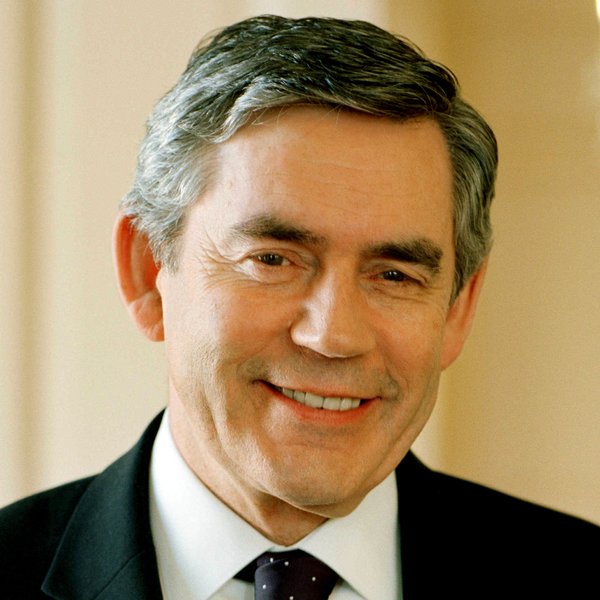
Gordon Brown
Former UK Prime Minister
Former UK Prime Minister (2007-2010). Named in Epstein-related disclosures after it emerged that Peter Mandelson attempted to arrange access to Downing Street for an associate described as Epstein's 'goddaughter' during Brown's time in office. Brown has not been accused of wrongdoing.
Gordon Brown in the Epstein Files — By the Numbers
Topics Covered
Gordon Brown is a British Labour politician who served as Prime Minister of the United Kingdom from June 2007 to May 2010, having previously served as Chancellor of the Exchequer from 1997 to 2007, the longest tenure in that office in modern history. Brown’s name surfaced in connection with the Epstein disclosures in two distinct ways: indirectly, through the conduct of figures who served in his government, and more directly through his own work in early 2026 pressing British police to investigate Jeffrey Epstein’s activities in the United Kingdom. He has not been accused of any wrongdoing.
The indirect connection runs through Peter Mandelson, who held senior posts in Brown’s government, including business secretary and first secretary of state. Al Jazeera reported that, based on released correspondence, Mandelson in 2009 attempted to help Jeffrey Epstein — who was then serving a sentence in Florida — arrange a visit to 10 Downing Street and the House of Lords for a young person Epstein described as his “goddaughter”; in the email exchange, when Mandelson asked “how old?” Epstein replied “15,” and Mandelson answered “Fine on all.” Al Jazeera made clear that there is no indication Gordon Brown knew of or was involved in these communications, which centered entirely on Mandelson. Separately, reporting on the released correspondence records that on 10 May 2010 Mandelson emailed Epstein saying “finally got him to go today,” the day before Brown left office. Brown later issued public condemnations of Mandelson, treating the disclosed communications as unauthorized conduct rather than anything he had sanctioned.
In February 2026, Brown took an active role as a campaigner pressing for accountability. The New Statesman reported that he submitted a five-page memorandum of evidence to the Metropolitan, Surrey, Sussex, Thames Valley and other UK police forces on 19 February 2026, following an earlier submission the prior week. The Irish Times reported Brown’s account that the documents showed Epstein “was able to use Stansted airport… to fly in girls from Latvia, Lithuania and Russia,” and quoted him saying that what he had found about “the abuse of women by male predators and their enablers — and Britain’s as yet unacknowledged role — has shocked me.” LBC reported, citing Brown’s account to the New Statesman, that Epstein’s aircraft made 90 flights to or from UK airports, including 15 after his 2008 conviction, and that Essex Police said they were assessing information about private flights into and out of Stansted Airport. The wider investigation into Mandelson is separate from Brown’s role; Mandelson has denied wrongdoing.
Is Gordon Brown in the Epstein files?
Gordon Brown himself is not described in the opened sources as a subject of the Epstein files or as someone accused of any wrongdoing. He appears in the surrounding story in two ways: indirectly, as the Prime Minister whose government Peter Mandelson served in when Mandelson corresponded with Epstein (including a 2009 request, reported by Al Jazeera, to arrange Downing Street access for a person Epstein called his “goddaughter,” whom he said was 15 — a matter centered on Mandelson, not Brown), and directly, as a campaigner who in February 2026 submitted dossiers of evidence to multiple UK police forces urging investigation of Epstein’s use of British airports, as reported by the New Statesman, the Irish Times and LBC. On the evidence of the sources reviewed here, his role is that of a former premier whose government was implicated through an associate’s conduct and who has since pressed publicly for accountability.
Connections
View in network →People most often named alongside Gordon Brown in coverage, plus documented connections. Counts reflect shared articles, not verified relationships.
Related Coverage
Olly Robbins Tells UK Foreign Affairs Committee of 'Serious Pressure' to Clear Mandelson
Rebecca Solnit: Feminism Enabled Prince Andrew Arrest
Guardian Columnist: Prince Andrew Arrest Shows Double Standard
Gordon Brown Demands Probe Into Andrew's RAF Base Epstein Meetings
Raskin, Jayapal Honor Late Epstein Survivor Giuffre at State of the Union
Prince Andrew Arrest Linked to Virginia Giuffre's Advocacy
British House of Lords Members Named in Epstein Files Face Pressure
Sources
- Mandelson Tried to Get Epstein Associate Access to Downing Street Under Gordon Brown — The Times →
- Mandelson tried to get Epstein's 'goddaughter' access to 10 Downing Street — Al Jazeera →
- Britain's former PM turned PI: why is Gordon Brown delving so deep into the Epstein files? — The Irish Times →
- Gordon Brown sends new Epstein dossier to police — New Statesman →
- Epstein's 'Lolita Express' flights to Britain assessed by police — LBC →