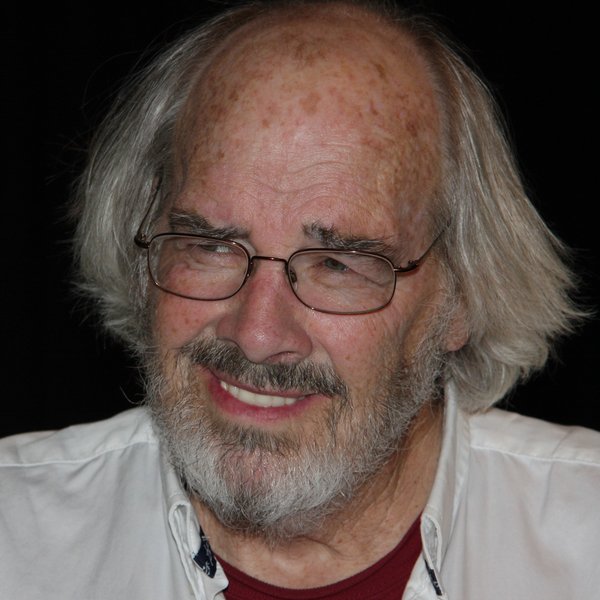
Jack Horner
American paleontologist; technical advisor on the Jurassic Park films and partial inspiration for the character Dr. Alan Grant
American paleontologist known for discovering Maiasaura and for serving as technical advisor on the Jurassic Park films, where he was a partial inspiration for the character Dr. Alan Grant. He appears in correspondence in the Epstein files after visiting an Epstein-owned New Mexico property in 2012 and exchanging emails thereafter; his employment at Chapman University ended in early 2026.
Jack Horner is an American paleontologist. He discovered Maiasaura with Bob Makela in 1978 — work that provided the first evidence that some non-avian dinosaurs cared for their young — and he spent much of his career at the Museum of the Rockies and Montana State University before teaching at Chapman University. He served as the technical advisor for the first five Jurassic Park films and was a partial inspiration for one of the lead characters of the franchise, Dr. Alan Grant.
Horner’s documented appearance in connection with Jeffrey Epstein stems from emails released as part of the Epstein files. According to the Daily Montanan, Horner visited Epstein’s New Mexico ranch in the summer of 2012 for a paleontological tour, with planning emails spanning April through August 2012 and Horner arriving on August 3. The Daily Montanan reports that, afterward, Horner thanked Epstein’s assistant and praised the hospitality, writing that although “we didn’t find any dinosaur fossils,” they noted “potential for marine reptiles.” The same report says Epstein expressed interest in supporting Horner’s “Dinochicken Project,” an effort to reverse-engineer embryos to produce chickens resembling extinct species. The Daily Montanan states that Horner “could not be reached for comment” and that the article does not describe him as a victim, accuser, or wrongdoer — only as named in released correspondence.
According to The Panther, Chapman University’s student newspaper, Chapman ended its employment relationship with Horner after the U.S. Department of Justice released emails linking him to Epstein, with his classes canceled in the days after the emails became public. The Panther reports that Chapman’s director of strategic communications, Robert Hitchcock, confirmed Horner was no longer employed but did not say whether he was fired or left voluntarily, and did not confirm that the separation was due to the Epstein connection. Neither the Daily Montanan nor The Panther published a direct response from Horner or his representatives.
Is Jack Horner in the Epstein files?
Yes. Paleontologist Jack Horner is named in the Epstein files through correspondence: according to the Daily Montanan, he visited an Epstein-owned New Mexico property in 2012 and exchanged emails afterward, including discussion of Epstein’s interest in funding a research project. As reported by The Panther, his employment at Chapman University ended in early 2026 following the release of those emails. Being named in this context is not evidence of any crime or wrongdoing, and the reporting reviewed here does not allege any. Horner had not provided a public response in the sources reviewed. See the sources above for the specific, documented details.
Documents
Primary-source records that reference Jack Horner. Inclusion in these documents is not, by itself, evidence of wrongdoing; the reporting reviewed here does not allege any wrongdoing by Horner.
- DOJ Epstein Files (EFTA release portal) — Horner is named in email correspondence among the Epstein files released by the Department of Justice. As reported by the Daily Montanan, the emails document his summer 2012 visit to an Epstein-owned New Mexico ranch for a paleontological tour and subsequent exchanges, including Epstein’s expressed interest in funding Horner’s “Dinochicken Project.” The reporting describes him only as named in released correspondence, not as an accuser or wrongdoer.
Connections
View in network →People most often named alongside Jack Horner in coverage, plus documented connections. Counts reflect shared articles, not verified relationships.