Citizen Journalists Decode Epstein Documents as Public Release Accelerates
Key Takeaways
- ▶ Channel 3000 reports citizen journalists and independent researchers are organizing to analyze newly released Epstein documents.
- ▶ Volunteer efforts reflect the growing volume of material entering public domain under the Epstein Transparency Act.
- ▶ The scale and complexity of document releases have created space for public participation in the review process.
Independent researchers and online volunteers are organizing to analyze the growing volume of documents related to Jeffrey Epstein, according to Channel 3000.1
The outlet reports that citizen journalists and citizen sleuths are helping to “unravel the tangle of Epstein documents” now entering the public domain.1 The report does not specify the platforms, tools, or methods these volunteers are using to coordinate their efforts.
The development comes as government agencies work to comply with the Epstein Transparency Act, signed into law in December 2024. That legislation requires federal agencies to declassify and release records related to Epstein within 180 days, with limited exceptions for national security and ongoing investigations.
Public Participation in Document Review
The involvement of volunteer researchers marks an unusual development in a federal investigation, where document review is typically conducted by law enforcement, congressional staff, or credentialed journalists.1
Channel 3000’s report suggests that the scale and complexity of the Epstein document releases have created space for public participation in the review process.1 The volume of material being released has prompted individuals outside traditional investigative institutions to organize their own review efforts.
Multiple federal agencies, including the FBI, CIA, and State Department, began processing records under the Transparency Act in January 2026. The FBI has not provided a timeline for completing its declassification review or releasing documents to the public.
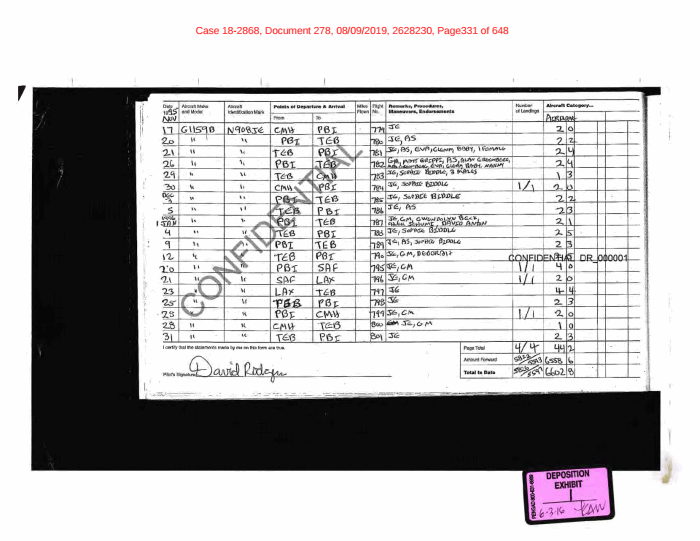
Federal courts have also released batches of documents from civil litigation involving Epstein and his associate Ghislaine Maxwell, who was convicted in December 2021 on federal charges of sex trafficking minors. Those court records include depositions, emails, and flight logs.
Background on Epstein Case
Epstein, a financier with connections to prominent figures in politics, business, and academia, was convicted in 2008 on state charges of soliciting a minor. He was arrested again in July 2019 on federal sex trafficking charges but died in his Manhattan jail cell in August 2019 while awaiting trial. His death was ruled a suicide by the New York City medical examiner.
The Epstein Transparency Act passed unanimously in both chambers of Congress before being signed into law. The legislation mandates the release of both classified and unclassified records related to Epstein’s crimes and associates.
Rep. Nancy Mace (R-S.C.) has called for complete transparency in the document release process, while Rep. Thomas Massie (R-Ky.) has criticized DOJ redactions in files released so far.
The citizen journalism effort reflects public demand for transparency in the case as document releases continue.1
 Ghislaine Maxwell
 Jeffrey Epstein
 Nancy Mace
 Thomas Massie