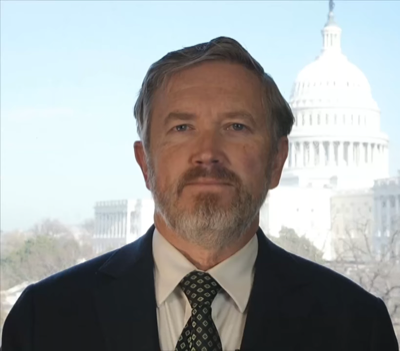
Thomas Massie
U.S. Representative (R-KY)
Libertarian-leaning Republican congressman who co-authored the Epstein Transparency Act with Ro Khanna and led the discharge petition effort that forced the bill to the House floor over White House opposition. After losing a Trump-backed primary in May 2026, he vowed to read additional redacted names from the files on the House floor before leaving Congress.
Thomas Massie in the Epstein Files — By the Numbers
Topics Covered
Thomas Massie is a Republican member of the U.S. House of Representatives, representing Kentucky’s 4th congressional district since 2012. A libertarian-leaning engineer and farmer known for his independence from party leadership, Massie became the legislative architect of the Epstein transparency movement — co-authoring the Epstein Transparency Act, leading the discharge petition that forced it to the floor, and emerging as one of the most persistent voices for full disclosure.
Political Background
Massie holds a bachelor’s and master’s degree in electrical engineering from MIT. He built a technology company before entering politics and has represented a rural Kentucky district since winning a special election in 2012. He has frequently been the lone Republican vote against party-line legislation, earning a reputation as a principled contrarian willing to break with leadership on constitutional and transparency grounds.
This independence positioned Massie to lead a bipartisan effort that the Republican leadership and the White House actively opposed.
Co-Authoring the Epstein Transparency Act
In July 2025, Massie and Rep. Ro Khanna (D-CA) introduced the Epstein Transparency Act. The bill was modeled on the President John F. Kennedy Assassination Records Collection Act of 1992, which established a framework for declassifying and releasing government records related to the Kennedy assassination.
The Epstein Transparency Act required federal agencies to identify, collect, and publicly release all records related to Jeffrey Epstein, with narrow exemptions for active law enforcement operations and victim privacy. The bipartisan authorship — a libertarian Republican and a progressive Democrat — was deliberate, designed to insulate the bill from partisan framing.
The Discharge Petition
When the House Judiciary Committee, under pressure from the White House, declined to schedule a markup of the bill, Massie filed a discharge petition on September 2, 2025. A discharge petition is a rarely successful procedural mechanism requiring 218 signatures — a majority of the House — to bypass committee leadership and bring a bill directly to the floor.
Massie signed first. Three other Republicans — Marjorie Taylor Greene, Lauren Boebert, and Nancy Mace — signed the same day. Combined with unified Democratic support, the four Republican signatures put the petition on a path to 218.
The White House response was immediate. A formal statement labeled Republican support for the petition “a very hostile act to the administration.” Donald Trump un-endorsed Greene and attacked the signatories publicly. Speaker Mike Johnson delayed the swearing-in of Rep. Adelita Grijalva (D-AZ), whose special election victory would provide the 218th signature.
Massie was public about the pressure he faced but did not waver. He framed the issue as a straightforward matter of government transparency, arguing that if the JFK files warranted public release, the Epstein files — involving a sex trafficking operation with documented connections to powerful living individuals — warranted the same treatment.
The 218th Signature and the Vote
On November 12, 2025, Grijalva was sworn in and signed the petition as the 218th name, triggering a mandatory floor vote. The House voted 427-1 on November 18. The Senate passed the bill unanimously the following day. Trump signed it into law on November 19.
Massie later noted the irony: the administration had expended enormous political capital fighting a bill that would ultimately pass with a single opposing vote.
Reviewing the Files
After the Transparency Act became law, Massie was among the first members of Congress to review the files at the Department of Justice. He and Ro Khanna visited the DOJ together in February 2026 to examine records.
Both members expressed concern that the releases were excessively redacted and that key names had been obscured. They began discussing inherent contempt proceedings against Attorney General Pam Bondi over the DOJ’s handling of compliance.
2026: Primary Defeat and a Vow to Name Names
On May 19, 2026, Massie lost the Republican primary in Kentucky’s 4th district to Ed Gallrein, a challenger backed by Donald Trump, in what Newsweek described as the most expensive House primary in U.S. history — a defeat widely tied to Massie’s break with Trump over forcing the Epstein files’ release. With his term running through January 2027 and reelection no longer a constraint, Massie said he intended to use his remaining months to read additional redacted names from the files aloud on the House floor, where the Constitution’s Speech or Debate Clause shields members from liability for what they say in legislative proceedings.
He said that if survivors compiled a list of names, he would read them, and he accused acting Attorney General Todd Blanche of failing to comply with the Epstein Files Transparency Act by keeping millions of pages withheld. Massie has previously named billionaires Leon Black, Jes Staley, and Leslie Wexner from the floor; none has been charged, and all deny wrongdoing.
Significance
Massie’s role in the Epstein transparency movement illustrated how a single legislator, working across party lines, could use procedural tools to overcome entrenched institutional resistance. The discharge petition — a mechanism that had succeeded only a handful of times in modern congressional history — became the vehicle that forced the most significant transparency legislation of the decade.
Connections
View in network →People most often named alongside Thomas Massie in coverage, plus documented connections. Counts reflect shared articles, not verified relationships.