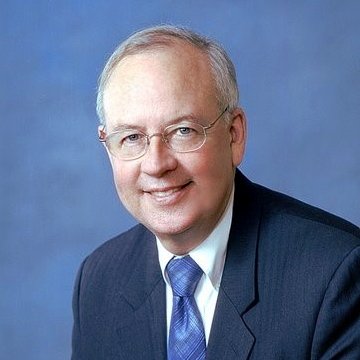
Ken Starr
Former independent counsel, attorney, university president (deceased 2022)
Former independent counsel who led the investigation of President Bill Clinton and later served as president of Baylor University. Starr joined Jeffrey Epstein's defense team and played a role in the legal effort that produced the controversial 2008 non-prosecution agreement in Florida. He died in September 2022.
Ken Starr in the Epstein Files — By the Numbers
Topics Covered
Kenneth W. Starr was an American lawyer whose public career included service as U.S. Solicitor General from 1989 to 1993 under President George H.W. Bush and as independent counsel from August 1994 to September 1998. As independent counsel he investigated the Whitewater controversy involving the Clinton administration, an inquiry that expanded to include the Clinton–Lewinsky matter and produced the Starr Report, which formed the basis for President Bill Clinton’s impeachment. Starr later served as president of Baylor University from 2010 to 2016. He died on September 13, 2022, at age 76, from complications following surgery at a hospital in Houston, according to the Texas Tribune.
Starr is relevant to the Epstein matter through his work as legal counsel for Jeffrey Epstein. Epstein’s defense lawyers included Roy Black, Gerald Lefcourt, Harvard Law School professor Alan Dershowitz, and former U.S. solicitor general Ken Starr. Starr joined the defense effort in 2007, while Epstein faced accusations involving underage girls, as described in a Newsweek timeline of the relationship.
The defense team negotiated a non-prosecution agreement with then–U.S. Attorney Alexander Acosta in Florida. Under the resulting plea deal Epstein pleaded guilty to one count of felony solicitation of prostitution and one count of procuring a person under 18 for prostitution, received an 18-month prison sentence, was required to register as a sex offender, and obtained immunity from federal charges that also extended to named and potential co-conspirators. As part of the defense effort, Starr did not confine his work to negotiating with Acosta’s office; according to the Newsweek timeline, reporter Julie K. Brown’s reporting describes Starr campaigning to pressure the Justice Department to drop the case, including an eight-page letter Starr is reported to have written to Deputy U.S. Attorney General Mark Filip.
In later public comments, Starr described his role favorably. Speaking on the record, as quoted by Fox News, Starr said he was “in the room” during the negotiations, called Alexander Acosta “a person of complete integrity,” and said the parties “ultimately came to an agreement that everyone was satisfied with.” In 2019, a federal judge (Judge Kenneth Marra of the U.S. District Court for the Southern District of Florida) found that the non-prosecution agreement had violated victims’ rights under the Crime Victims’ Rights Act; this decision was later overturned by an appellate court in 2020.
Is Ken Starr in the Epstein files?
Ken Starr’s connection to Jeffrey Epstein is as one of Epstein’s defense attorneys. He was among the defense lawyers who represented Epstein during the proceedings that led to the 2007–2008 federal non-prosecution agreement in Florida. The “Epstein files” are a body of documents detailing Epstein’s activities, separate from the roster of his legal representatives, and the reporting reviewed here does not identify Starr as a subject named in those files. Starr’s role in this matter was that of legal counsel for Epstein, not that of a person named in those files.
Documents
Primary-source records that reference Ken Starr. Starr’s role in the Epstein matter was that of one of Epstein’s defense lawyers; being named in these records is not, by itself, evidence of wrongdoing.
- Giuffre v. Maxwell — unsealed court records (Jan. 2024) — Starr is referenced in the documents unsealed in this civil case (U.S. District Court, S.D.N.Y., No. 1:15-cv-07433), but only as counsel: an email exhibit names “Kenneth Starr” alongside Alan Dershowitz as among the lawyers who negotiated Epstein’s plea agreement — the records expressly note he is mentioned “as one of the lawyers,” not as an abuser.
- DOJ Office of Professional Responsibility report on the 2006–2008 investigation and non-prosecution agreement (Nov. 2020) — This report examines the federal investigation and the resulting non-prosecution agreement that Starr’s defense team negotiated with then–U.S. Attorney Alexander Acosta. Starr has said publicly that he was “in the room” during those negotiations.
Connections
View in network →People most often named alongside Ken Starr in coverage, plus documented connections. Counts reflect shared articles, not verified relationships.
Sources
- How a Future Trump Cabinet Member Gave a Serial Sex Abuser the Deal of a Lifetime — Miami Herald →
- Ken Starr, Who Investigated Clinton, Dies at 76 — The New York Times →
- Ken Starr, former Baylor president and Clinton investigator, dies at 76 — The Texas Tribune →
- Ken Starr and Jeffrey Epstein—A Timeline of Their Relationship — Newsweek →
- Former Epstein attorney Ken Starr says Alex Acosta played tough in 2008 — Fox News →