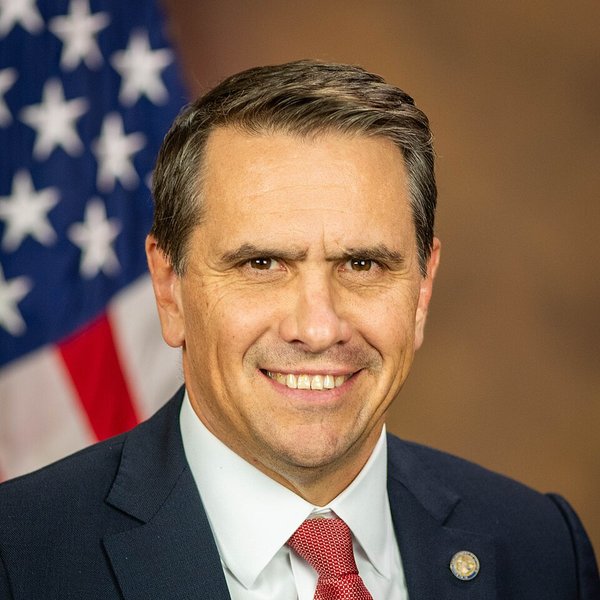
Todd Blanche
Acting U.S. Attorney General; former personal defense attorney for Donald Trump
A former federal prosecutor who became Donald Trump's lead criminal-defense lawyer, Todd Blanche was confirmed Deputy Attorney General in March 2025 and became acting attorney general on April 2, 2026 after Trump fired Pam Bondi over her handling of the Epstein files. Blanche oversaw the Justice Department's release of the Epstein records, personally interviewed Ghislaine Maxwell in 2025 — after which she was moved to a minimum-security prison camp — and told a Senate panel in May 2026 that the department would not recommend a pardon for her. Critics note the conflict of running a department weighing Epstein matters that touch the president he once defended in court.
Todd Blanche in the Epstein Files — By the Numbers
Topics Covered
Todd Wallace Blanche is the acting Attorney General of the United States and the official most directly responsible, since the spring of 2026, for the Justice Department’s handling of the Jeffrey Epstein files. He arrived in that role by an unusual route: he was Donald Trump’s lead personal criminal-defense lawyer before he ran the department that holds the Epstein records.
From Prosecutor to Trump’s Defense Lawyer
Blanche, born in 1974, spent the first part of his legal career as a federal prosecutor. He was an Assistant U.S. Attorney in the Southern District of New York from 2006 to 2014, where he worked on violent-crime cases, rose to co-chief of a division, and ran the office’s White Plains branch. He later moved into private practice, becoming a partner at Cadwalader, Wickersham & Taft before founding his own firm, Blanche Law, in April 2023.
That same month, he took on the client who would define his public profile. Blanche became Trump’s lead defense attorney in the Manhattan case over hush-money payments, leading the defense at the 2024 trial that ended with a jury convicting Trump on 34 felony counts of falsifying business records. He also represented Trump in the federal classified-documents and election-related cases, and switched his party registration from Democrat to Republican.
Trump has been blunt about what that work meant to him, praising Blanche as the lawyer who “kept me out of jail for years.”
Deputy, Then Acting Attorney General
After Trump’s return to office, Blanche was nominated Deputy Attorney General in November 2024 and confirmed by the Senate on March 5, 2025, in a 52-46 vote. He was sworn in the next day as the No. 2 official at the Justice Department.
On April 2, 2026, Trump fired Attorney General Pam Bondi amid mounting dissatisfaction with her management of the Epstein files, and Blanche stepped up to run the department in an acting capacity. He has since been widely described as auditioning for the permanent job, even as Trump has reportedly weighed other candidates.
Role in the Epstein Files
Blanche’s tenure has been bound up with the Epstein matter from the start. In her May 29, 2026 transcribed interview with the House Oversight Committee, Bondi told lawmakers that it was Blanche — then deputy attorney general — who “had overseen the process to publish” the Epstein records under the Epstein Files Transparency Act, a release that drew bipartisan criticism for missed deadlines and for redactions that exposed victims’ personal information.
The department’s compliance with that law is now the subject of an inspector general review, and lawmakers in both parties have accused it of using heavy redactions to shield politically connected figures named in the files.
The Maxwell Interviews
Blanche personally inserted himself into the case in the summer of 2025, when he requested and conducted interviews with Ghislaine Maxwell, Epstein’s imprisoned former associate. The Justice Department later released transcripts in which Maxwell said she had not seen Trump “in any inappropriate setting.” Maxwell was given limited immunity for the proffer sessions, and — in a move that drew sharp criticism from survivors and lawmakers — she was transferred to a minimum-security prison camp in Texas not long afterward, a step Blanche attributed to threats against her life.
In Senate testimony on May 19, 2026, Blanche sought to close off one avenue of speculation, telling Sen. Chris Van Hollen, “Yes, I can commit to that, of course,” when asked to pledge that the department would not recommend a pardon for Maxwell. The commitment binds only the department’s recommendation; the pardon power belongs to Trump alone.
Conflict-of-Interest Concerns
Blanche’s dual history — Trump’s paid defense lawyer, then the acting head of the department investigating and disclosing materials that touch the president — is the central criticism leveled against him. Watchdogs and Democratic lawmakers have argued that an official who built his recent career defending Trump should not be the one making decisions about Epstein records, redactions, and a potential Maxwell pardon, all of which carry political stakes for Trump.
What Is Established
Blanche has not been accused of any crime in connection with Epstein. What is documented is his proximity to every major decision point in the government’s handling of the case during 2025 and 2026: he interviewed the only living person convicted alongside Epstein, he oversaw the contested release of the federal files, and he is the official who would advise the president on any clemency request. Whether that record reflects ordinary stewardship of a difficult matter or an unresolved conflict of interest is the question his critics continue to press.
Connections
View in network →People most often named alongside Todd Blanche in coverage, plus documented connections. Counts reflect shared articles, not verified relationships.