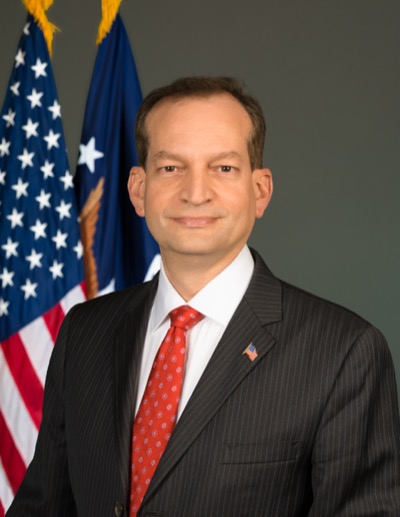
Alexander Acosta
Former U.S. Attorney, Former Secretary of Labor
As U.S. Attorney for the Southern District of Florida, Acosta's office negotiated the 2007-2008 non-prosecution agreement that allowed Epstein to plead to state charges, serve 13 months with work release, and granted immunity from federal prosecution to four named co-conspirators and any unnamed potential co-conspirators — a deal a federal judge later ruled violated victims' rights. A 2020 DOJ review found Acosta exercised 'poor judgment' but committed no professional misconduct. Served as Trump's Secretary of Labor until resigning in July 2019 amid renewed scrutiny of the deal. In 2025–2026 House Oversight reexamined the agreement; Bloomberg reporting revealed his office had investigated Epstein for money laundering, contradicting his testimony that he did not recall any 'potential financial crimes.'
Alexander Acosta in the Epstein Files — By the Numbers
Topics Covered
R. Alexander Acosta served as U.S. Attorney for the Southern District of Florida from 2005 to 2009. During that period, his office oversaw the federal investigation into Jeffrey Epstein and negotiated the non-prosecution agreement (NPA) that became one of the most consequential — and most condemned — prosecutorial decisions in the Epstein case. The deal allowed Epstein to avoid federal charges, plead to state offenses, serve his sentence in county jail with work release, and secured immunity from federal prosecution for four named co-conspirators and any unnamed potential co-conspirators.
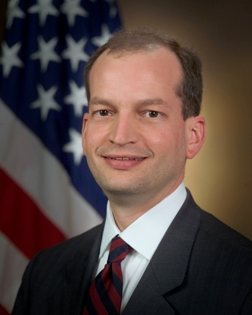
A federal judge later ruled that the deal violated the Crime Victims’ Rights Act. Acosta went on to serve in Donald Trump’s cabinet — and resigned under pressure when the deal’s terms became a subject of national outrage.
The Federal Investigation
The investigation into Epstein began in March 2005 with the Palm Beach Police Department, which received a complaint from the mother of a 14-year-old girl. Chief Michael Reiter and Detective Joe Recarey conducted a thorough investigation that identified at least 36 underage victims and gathered substantial physical evidence from Epstein’s Palm Beach estate, including hidden cameras, photographs, and massage tables.
Palm Beach police referred the case to the FBI and the U.S. Attorney’s office after concluding that Palm Beach County State Attorney Barry Krischer was not pursuing charges aggressively. A federal grand jury investigation was convened. FBI agents identified additional victims and built a case that, by 2007, had produced a 53-page draft federal indictment.
The draft indictment was ready to be filed. It would have charged Epstein with federal sex trafficking offenses that carried potential sentences of decades in prison. Multiple law enforcement officials involved in the investigation expected federal charges to follow.
The Non-Prosecution Agreement
Instead, Acosta’s office entered into negotiations with Epstein’s defense team — which included Alan Dershowitz, Kenneth Starr, Jay Lefkowitz, and Gerald Lefcourt. The result was the non-prosecution agreement, signed in September 2007 and finalized in June 2008.
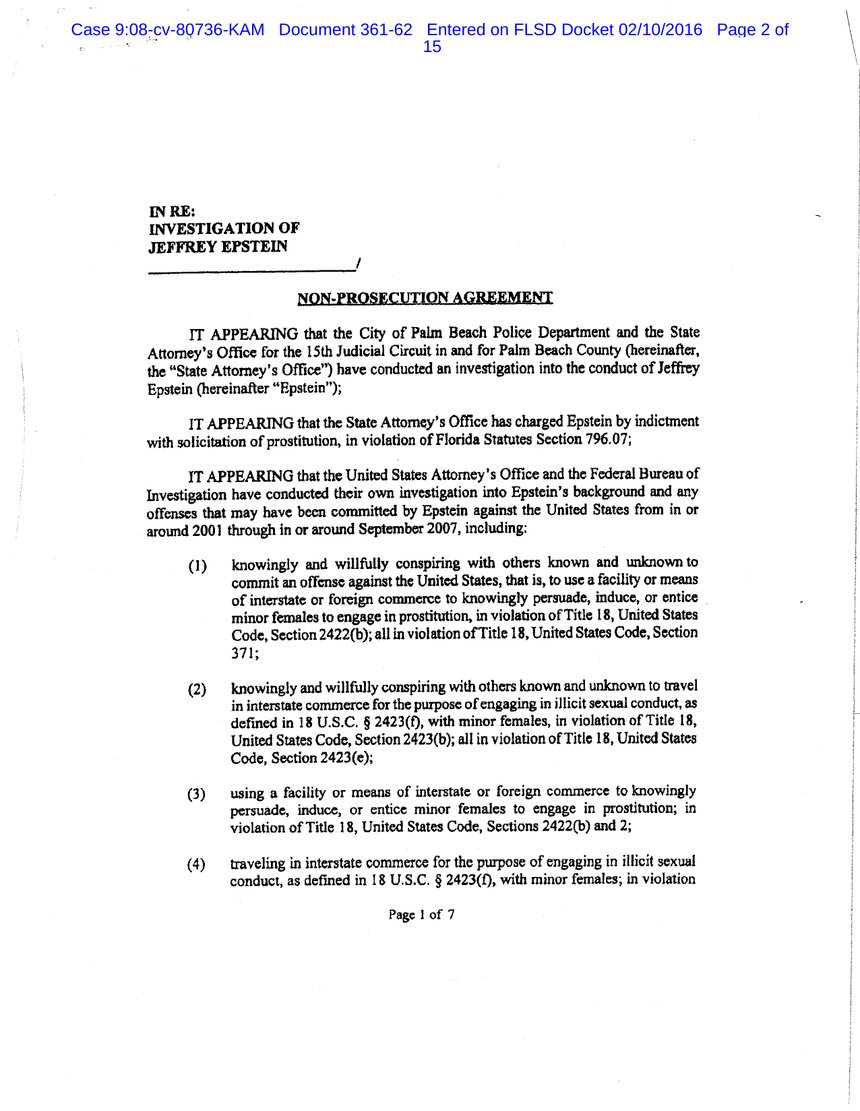
The terms of the NPA were extraordinary:
- State charges only: Epstein pleaded guilty to two Florida state charges — one count of solicitation of prostitution and one count of procurement of minors for prostitution. The federal charges were dropped.
- 13 months in county jail: Epstein was sentenced to 18 months in the Palm Beach County Stockade — a county jail, not a federal prison. He served approximately 13 months.
- Work release: Epstein was granted work release six days a week, 12 hours a day. He was permitted to leave the jail and go to his office in downtown West Palm Beach. The work release arrangement was administered by the Palm Beach County Sheriff’s Office and, according to later reporting, involved remarkably loose supervision. Epstein’s office received visits from young women during the work release period.
- Sex offender registration: Epstein was required to register as a sex offender.
- Co-conspirator immunity: The NPA included a clause granting immunity from federal prosecution to four named co-conspirators — Sarah Kellen, Adriana Ross, Lesley Groff, and Nadia Marcinkova — and to any unnamed “potential co-conspirators.” This unusually broad provision effectively shut down any broader federal investigation into the network of individuals who facilitated Epstein’s crimes — the recruiters, schedulers, and enablers who made the trafficking operation possible.
- Victims not notified: The agreement was negotiated and finalized without notifying the victims, as required by the federal Crime Victims’ Rights Act.
The NPA was kept sealed until after it was finalized, meaning that the public — and the victims — did not know its full terms until years later.
The Crime Victims’ Rights Act Violation
In 2008, two of Epstein’s victims — represented by attorneys Brad Edwards and Paul Cassell — filed a lawsuit arguing that the NPA violated the Crime Victims’ Rights Act (CVRA), which guarantees crime victims the right to confer with the prosecutor and to be treated with fairness.
The case wound through the federal courts for more than a decade. On February 21, 2019, U.S. District Judge Kenneth Marra issued a landmark ruling: the government had violated the CVRA by keeping the victims in the dark about the plea agreement. Judge Marra wrote that prosecutors had an obligation to notify the victims and failed to do so.
The ruling was significant not only for the Epstein case but as a broader statement about victims’ rights in federal prosecutions. It established that the government cannot negotiate a plea deal that affects crime victims without informing them.
The ruling came too late to undo the plea deal — Epstein had already served his sentence — but it placed the NPA’s terms on the public record and contributed to the momentum that led to Epstein’s 2019 federal arrest on new charges.
The Reported “Belonged to Intelligence” Claim
In a 2019 Daily Beast article, journalist Vicky Ward reported that when Acosta was vetted for the position of Secretary of Labor during the Trump transition, he told his interviewers, “I was told Epstein ‘belonged to intelligence’ and to leave it alone.” Ward presented this as something Acosta said he had been told, not as a verified fact. The claim is attributed to Ward’s reporting and has not been independently corroborated on the public record.
Acosta has not publicly confirmed the account as Ward framed it, and the 2020 DOJ Office of Professional Responsibility review reported that, when asked whether Epstein had been an intelligence asset, Acosta said “the answer is no.” That review stated it found “no evidence suggesting that Epstein was such a cooperating witness or ‘intelligence asset.’”
The reported remark has nonetheless fueled extensive speculation about whether Epstein had connections to U.S. or foreign intelligence services — speculation that no government agency has confirmed. Whether the lenient plea deal was influenced by factors beyond the evidence and the law remains unestablished; no official investigation has found that intelligence considerations played a role.
Nomination and Confirmation as Secretary of Labor
Despite his role in the Epstein plea deal, Acosta was nominated by President Trump to serve as Secretary of Labor in February 2017. He was confirmed by the Senate on April 27, 2017, on a vote of 60-38.
During his confirmation hearing, Acosta defended the plea deal, arguing that the state charges resulted in Epstein going to jail and registering as a sex offender — outcomes that, he suggested, would not have been guaranteed under a federal prosecution. He characterized the deal as the best outcome available given the circumstances and the state of the law at the time.
Senators questioned Acosta about the deal’s terms, but the confirmation proceeded. The Epstein case was not yet the national story it would become.
The Miami Herald Investigation
In November 2018, Julie K. Brown of the Miami Herald published “Perversion of Justice,” a multi-part investigative series that examined the 2008 plea deal in detail. Brown tracked down approximately 80 of Epstein’s victims — far more than the 36 identified in the original Palm Beach investigation — and documented the leniency of the deal, the work release conditions, and the failure to notify victims.
The series brought national attention to the case and, specifically, to Acosta’s role in the NPA. It was widely cited as a catalyst for the renewed federal investigation that led to Epstein’s July 2019 arrest.
Resignation
On July 6, 2019, Epstein was arrested on new federal sex trafficking charges by the U.S. Attorney’s Office for the Southern District of New York. The arrest reignited scrutiny of the 2008 plea deal and of Acosta’s role in it.
On July 10, 2019, Acosta held a press conference at the Department of Labor in which he defended the plea deal, argued that the case was handled appropriately given the legal landscape of 2008, and attempted to shift responsibility to the state attorney’s office. The press conference was widely viewed as unsuccessful in deflecting criticism.
On July 12, 2019, Acosta resigned as Secretary of Labor, effective one week later. Trump, standing alongside Acosta at the White House, praised him as a “great” Labor Secretary and said the resignation was Acosta’s decision. Acosta said he did not want the case to be “a distraction” from the administration’s work.
The Co-Conspirator Immunity Question
The immunity clause in the NPA remains one of the most significant and least resolved aspects of the case. By granting immunity to four named co-conspirators — Sarah Kellen, Adriana Ross, Lesley Groff, and Nadia Marcinkova — and to any unnamed “potential co-conspirators,” the agreement ensured that individuals who facilitated Epstein’s trafficking would not face federal prosecution under this agreement for their roles.
The immunity clause effectively foreclosed the broader federal investigation that victims and law enforcement had hoped would follow Epstein’s prosecution. Palm Beach Police Chief Michael Reiter and Detective Joseph Recarey, who had built the case, both publicly protested the decision not to pursue stronger charges.
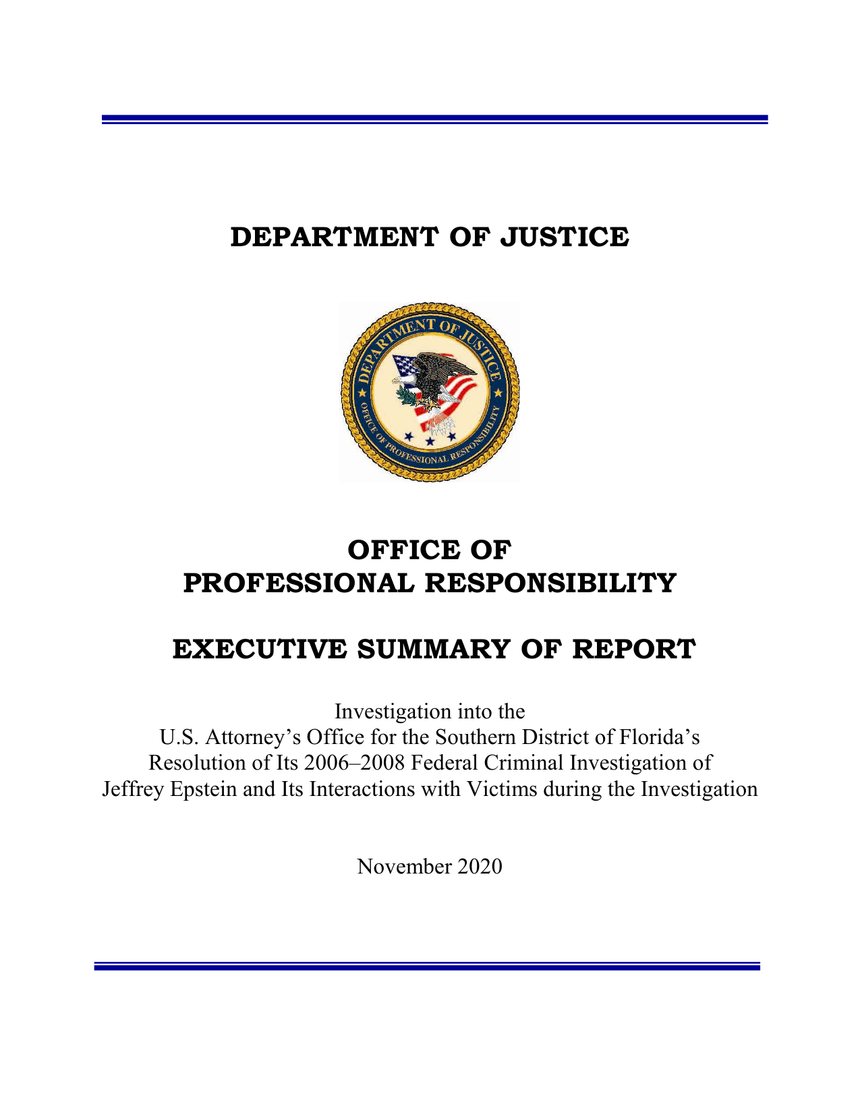
The question of why Acosta’s office agreed to such broad co-conspirator immunity has been examined but not fully resolved. The 2020 DOJ Office of Professional Responsibility review concluded the decision was within Acosta’s discretion and found no evidence it resulted from corruption or from Epstein’s wealth, status, or associations, while characterizing it as “poor judgment.” The pressure from Epstein’s defense team has been cited as one factor. Additional documents released under the Epstein Transparency Act may shed further light.
2025–2026: Congressional Scrutiny Returns
Acosta’s handling of the case returned to the center of national politics in 2025 and 2026, as the House Oversight Committee made the 2008 non-prosecution agreement a focus of its investigation into the federal government’s treatment of Epstein and Ghislaine Maxwell.
On September 19, 2025, Acosta sat for a roughly six-hour transcribed interview with the committee, defending his office’s work as he had for years — arguing that the deal at least guaranteed Epstein jail time and sex-offender registration.
Weeks later, that testimony collided with the documentary record. On October 31, 2025, Bloomberg News reported — citing emails from Epstein’s private Yahoo account — that Acosta’s office had investigated Epstein for money laundering as part of its sex-crimes probe. The lead prosecutor, former Assistant U.S. Attorney Marie Villafaña, had prepared an 82-page prosecution memo in May 2007 recommending that Epstein be charged with financial crimes including money laundering, and the office examined allegations that he ran an unlicensed money-transmitting business. The financial inquiry ran roughly 18 months and, according to the reporting, turned up at least tens of millions of dollars in questionable transactions; the cadence of records requests increased in August 2007, and Villafaña contacted Epstein’s money-management client Leslie Wexner about the inquiry.
Yet Acosta had told the committee in September that he did not recall any discussion of “potential financial crimes.” Chairman James Comer asked Acosta whether he wished to clarify his testimony, and the panel’s ranking Democrat, Robert Garcia, said it was “now clear that former U.S. Attorney Alex Acosta may have misled Congress.”
The scrutiny intensified in the spring. On May 12, 2026, Oversight Democrats released an interim report, “The Price of Non-Prosecution,” arguing that the leniency of the 2008 deal had let Epstein build an international trafficking operation “from Palm Beach to Paris.” It was released alongside a survivor field hearing in West Palm Beach that Democrats called the start of a “new phase” of the inquiry.
What Is and Is Not Established
Acosta was not accused of criminal conduct. He was not alleged to have been aware of or involved in Epstein’s crimes. His role was prosecutorial: he was the U.S. Attorney who had the authority and the evidence to pursue a federal case against Epstein and chose not to.
What is established is that Acosta’s office negotiated a deal that allowed Epstein — who admitted to state prostitution-related offenses and was later charged federally with sex trafficking of minors — to serve 13 months in a county jail with work release privileges. The deal immunized four named co-conspirators and any unnamed potential co-conspirators. It was kept sealed, without notifying the victims, and a federal judge ruled this violated the Crime Victims’ Rights Act. A 2020 DOJ review characterized Acosta’s handling as “poor judgment” but found no professional misconduct. A widely circulated claim — reported by Vicky Ward and attributed to Acosta’s transition vetting — that he was told Epstein “belonged to intelligence” remains uncorroborated, and the DOJ review found no evidence Epstein was an intelligence asset.
The plea deal resolved the federal investigation without charges and, in the years that followed, was widely criticized for shielding Epstein and his associates from broader federal accountability. Between 2008 and 2019, Epstein remained active among the powerful — continuing to host visitors at his properties and maintaining his social network — until the agreement’s terms came under renewed public scrutiny and he was arrested on new federal charges.
Evidence
These passages come from the DOJ Office of Professional Responsibility report (Nov. 2020) named in this profile; the annotations connect each to what this profile states.
DOJ Office of Professional Responsibility report · Nov. 2020
Found Acosta exercised “poor judgment1” in resolving the matter through the agreement, but committed no professional misconduct.
DOJ Office of Professional Responsibility report · Nov. 2020
Stated it found “no evidence suggesting that Epstein was such a cooperating witness or 'intelligence asset'2.”
Transcribed from the released documents. Text reproduction, not a scan.
Our annotations
The DOJ review’s finding, restated throughout this profile: poor judgment in resolving the case through the non-prosecution agreement, but no professional misconduct, and no finding it resulted from corruption or Epstein’s wealth or status.
Bears on the reported, uncorroborated claim that Acosta was told Epstein “belonged to intelligence.” Asked directly, Acosta said “the answer is no,” and the OPR review found no evidence Epstein was an intelligence asset.
Read the original: DOJ OPR report (Nov. 2020) ↗
Documents
Primary-source records that name or reference Alexander Acosta. Acosta was never accused of any crime and was not alleged to be aware of or involved in Epstein’s offenses; his role was prosecutorial.
- Giuffre v. Maxwell — unsealed court records (Jan. 2024) — The 2007–2008 non-prosecution agreement Acosta authorized as U.S. Attorney for the Southern District of Florida is among the exhibits unsealed in this civil case (U.S. District Court, S.D.N.Y., No. 1:15-cv-07433). The signed agreement, filed as Document 1330-6, opens “on the authority of R. Alexander Acosta, United States Attorney for the Southern District of Florida” and bears his signature block.
- DOJ Office of Professional Responsibility report on the 2006–2008 investigation and non-prosecution agreement (Nov. 2020) — Acosta is the central subject of this DOJ review of the federal handling of the Epstein case. It concluded he exercised “poor judgment” in resolving the matter through the non-prosecution agreement but committed no professional misconduct, and reported finding no evidence that Epstein was an intelligence asset.
- Oversight Democrats, “The Price of Non-Prosecution” (interim staff report, May 12, 2026) — A House Oversight Committee minority report arguing that the leniency of the non-prosecution agreement Acosta authorized allowed Epstein to continue and expand his trafficking operation internationally after 2008. Released with a survivor field hearing in West Palm Beach.
Connections
View in network →People most often named alongside Alexander Acosta in coverage, plus documented connections. Counts reflect shared articles, not verified relationships.
Show 15 more →
Alexander Acosta in the Timeline
Related Coverage
Oversight Democrats' Report: Acosta's 2008 Plea Deal Let Epstein Build a Global Trafficking Network
Epstein Survivors Testify at Palm Beach Field Hearing as Democrats Declare 'New Phase' of Investigation
Methodist Church Suspends Clergy Member Over Epstein Connection
Steven Sinofsky's Undisclosed Epstein Ties From Microsoft Days
Bloomberg: Secret DEA Probe Examined Epstein Ketamine, Prostitution Ring
DOJ Releases Previously Withheld Epstein Files Containing Trump Allegations
Virginia Giuffre's Brother Becomes Public Advocate in Epstein Case
Kirkland & Ellis Internal Feuding Secured Epstein Plea Deal: Law.com
Epstein Survivor Calls Wexner's House Testimony 'Abhorrent'
Epstein Emails Spread Across Social Media in Viral Leak
Consultants Pitched Epstein Access to NY Democrats for Donations
How Elite Immunity Protected Epstein: NYT Investigation Reveals
Newly Released Video from Epstein's Office Revealed in Latest Files Dump
Trump Calls for End to Epstein Investigation
Orioles Owner David Rubenstein Named in Epstein Files
Epstein Emails Expose Ex-Clifford Chance Lawyer's Hidden Ties
FBI Begins Review of Epstein-Related Records Under New Law
Sources
- Perversion of Justice — Miami Herald →
- Acosta Resigns Amid Epstein Controversy — NPR →
- Acosta Told Trump Team Epstein 'Belonged to Intelligence' — Daily Beast →
- Judge Rules Epstein Plea Deal Violated Victims' Rights — Washington Post →
- How a Future Trump Cabinet Member Gave a Serial Sex Abuser the Deal of a Lifetime — Miami Herald →
- The Epstein Connections Fueling Conspiracy Theories — FactCheck.org →
- Key Takeaways From the DOJ Review of the Epstein Deal (OPR 'poor judgment') — ABC News →
- Trump Labor Secretary Alex Acosta Resigns Amid Epstein Controversy — ABC News →