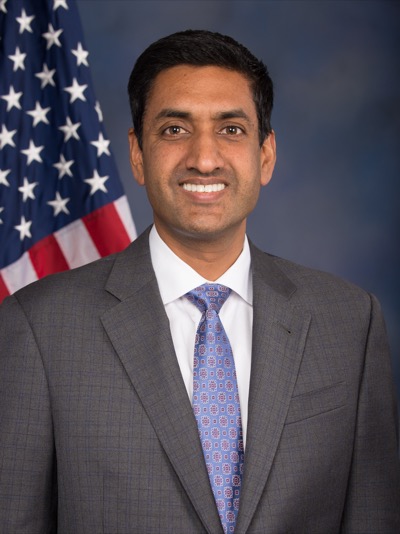
Ro Khanna
U.S. Representative (D-CA)
Democratic congressman who co-authored the Epstein Transparency Act with Thomas Massie, reviewed files at the DOJ, and publicly named six individuals from the House floor whose identities had been redacted — including labeling Leslie Wexner an FBI-designated 'co-conspirator.'
Ro Khanna in the Epstein Files — By the Numbers
Topics Covered
Ro Khanna is a Democratic U.S. Representative from California’s 17th congressional district, serving since 2017. A progressive representing Silicon Valley, Khanna became one of the most prominent voices in the Epstein transparency movement — co-authoring the legislation that forced the files’ release and taking the extraordinary step of naming redacted individuals from the House floor.
Co-Authoring the Epstein Transparency Act
In July 2025, Khanna and Rep. Thomas Massie (R-KY) introduced the Epstein Transparency Act. The bipartisan partnership — a progressive Democrat and a libertarian Republican — was central to the bill’s strategy. By pairing authors from opposite ends of the political spectrum, Khanna and Massie made it difficult for either party to dismiss the legislation as partisan.
Khanna drew on the precedent of the JFK Assassination Records Collection Act, arguing that the American public had a right to see government records related to a sex trafficking operation that involved powerful and politically connected individuals.
When the White House fought the discharge petition, Khanna was vocal in framing the administration’s opposition as evidence that the files contained information damaging to powerful people. After Donald Trump called the files a “hoax” and labeled his own supporters “weaklings” for demanding transparency, Khanna pointed to Trump’s reversal as confirmation that the files warranted release.
The Trump Reversal
Following the passage of the Epstein Transparency Act on November 18-19, 2025, Khanna observed that Trump “saw the math” and “caved to the coalition.” He was one of the first members of Congress to note publicly that the administration had spent months fighting a bill that would pass 427-1 — suggesting the opposition was never about policy but about protecting specific individuals.
Reviewing the Files at the DOJ
In February 2026, Khanna traveled to the Department of Justice with Thomas Massie to review Epstein files in person. What they found reinforced their concerns about excessive redactions. Khanna stated that key names had been blacked out and that the DOJ’s compliance with the Transparency Act was incomplete.
Naming Names from the House Floor
On February 10, 2026, Khanna took the extraordinary step of naming six individuals from the House floor whose identities had been redacted from the official releases. Congressional floor speech is protected by the Speech or Debate Clause of the Constitution, which shields members from legal liability for statements made in legislative proceedings.
Among those Khanna named was Leslie Wexner, the billionaire founder of L Brands (Victoria’s Secret, Bath & Body Works). Khanna identified Wexner as an FBI-designated “co-conspirator” in Epstein’s sex trafficking operation — a designation that had been redacted from the public releases.
The speech made national headlines. Khanna argued that the American public had a right to know the identities of individuals connected to the trafficking operation, and that the DOJ’s redactions were protecting powerful figures rather than victims.
Response to Bin Sulayem Resignation
When Sultan Ahmed Bin Sulayem was forced out as CEO of DP World in February 2026 after appearing in the Epstein files, Khanna demanded further name disclosures. He argued the resignation proved that the files contained consequential information about living individuals and that continued redactions served only to protect the unnamed.
Inherent Contempt
By February 2026, Khanna and Massie had begun discussing pursuing inherent contempt proceedings against Attorney General Pam Bondi, arguing the DOJ had failed to fully comply with the Transparency Act. The threat of inherent contempt — a congressional power to enforce compliance without relying on the DOJ to prosecute itself — represented an escalation in the standoff between Congress and the executive branch over the files.
Connections
View in network →People most often named alongside Ro Khanna in coverage, plus documented connections. Counts reflect shared articles, not verified relationships.